Search This Blog

Wednesday, September 18, 2013

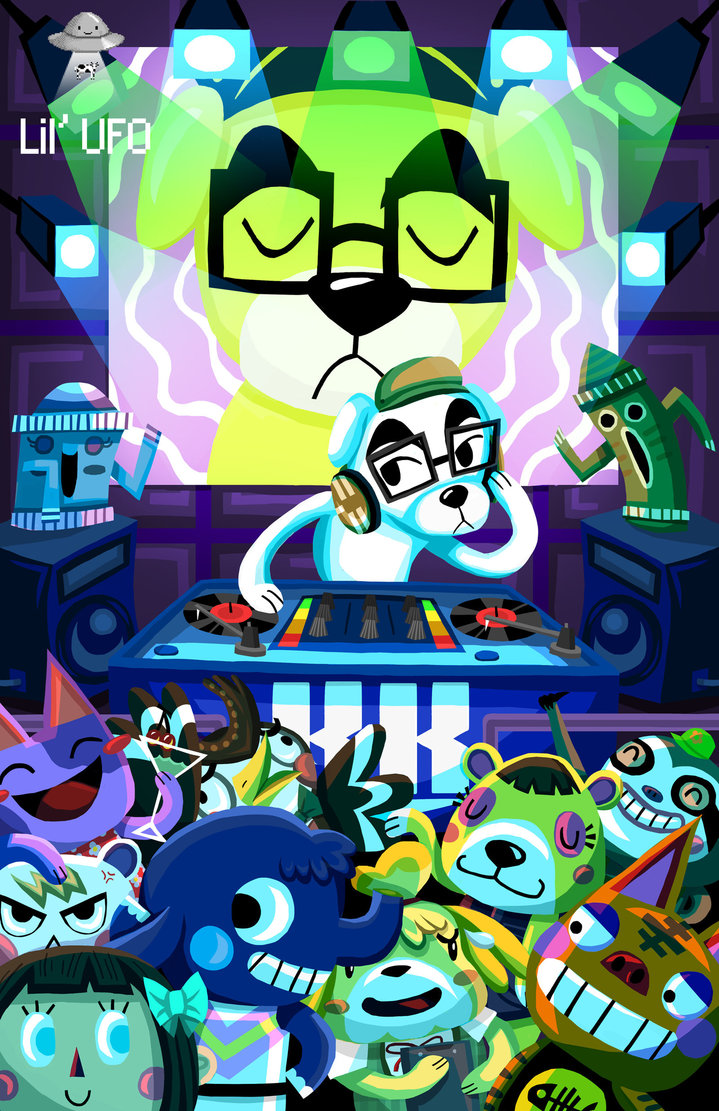
Game Art #60: Animal Crossing Gallery

If there's one series that's long overdue to get an entire Game Art feature dedicated to it, it would have to be Animal Crossing. This series takes the mundane that is regularly life activities and makes them fun. True, it isn't a series for everyone, but those that enjoy it are absolutely hooked. Enjoy the art.

By Dreatos
By Jiayi
By everfae
By Delano-Laramie
By Delano-Laramie
By KerriAitken
By LilUFO
By Shattered-Earth
By Kitchiki
Unknown Artist
By Rokuroubuna
Pixiv ID
By crayon-chewer

Friday, September 13, 2013

Mega Man, Capcom and an Outraged Fanbase


The Mega Man franchise has been treated with, how shall we say, less than admirable care over the past few years regarding video games. Oh sure, he's got a fantastic comic book thanks to the fine folks at Archie Comics and he's got topnotch marketing in merchandise like toys, figures and the like. But when it comes to gaming, the medium where the character was birthed? The Blue Bomber has certainly seen better days. Capcom's poor treatment of the franchise has understandably earned them the disdain of his legions of fans.

It isn't just the lack of love Capcom has been showing Mega Man that's gotten them on gamer's bad side, although that is a large part of where the hate comes from. The third party has made a slew of awful releases like Resident Evil 6, hopped on the DLC band wagon, and had the gull to charge players for content that was already on a game they payed for in Street Fighter X Tekken. The gist of it? Capcom is sucking hard and with the recent announcement to keep forcing more DLC down our throats due to all their failures, I don't think things are going to turn around anytime soon.

The spiritual successor to Mega Man.

Yet, fans continue to shout to the rooftops for a new Mega Man game from Capcom. It's what they've been most vocal about over the last few years. And it seems those loud roars have been heard and the answered but maybe not in the way we were all expecting.

Co-creator Keiji Inafunae and his crew at comcept launched a Kickstarter for a project called Mighty No. 9. Beck (Might No. 9's real name) may not be called Rock but the reassemble to Mega Man is undeniable. Beck can attain the weapons of his enemies, just like Mega Man but he also has the ability to transform, something our pal Rock cannot do. Differences aside, Mighty No. 9 is very much a spiritual successor to Mega Man. In just two days, the initial Kickstarter goal was met and Mighty No. 9 was officially green lit. Not only that, but other stretch goals are still being met with over $2 million being raised from fans as of this writing. Does Capcom need further proof that demand for Mega Man exists?

As annoyed as I am with Capcom right now and their current business practices, I don't hate the company, nor do I wish for them to go down in flames. Wishing for a game company to go out of business is not doing this industry any favors. At the same time, I don't think a Mega Man game from the company is something that we need right now.

"Whoa, hold up, Reg! Capcom has been screwing Mega Man over for years! A Mega Man game is what we want!"

The first Classic 2D Mega Man game to be
done outside of 8-bits.

Yeah, I get that, believe me. You've made that message loud and clear. But stop and think for a second. Capcom is currently putting out crappy products and is shoving DLC soap down our throats. Also, take into account the number of people that have since left Capcom. Everyone working on Might No. 9 at comcept had a hand in the development on the Mega Man games at one point or another. None of those people are at Capcom anymore and God only knows how many others are no longer there. I'm not saying Inafunae has to make Mega Man in order for us to have a good game. The feeling I'm getting from Capcom is that the reason they haven't released a new Mega Man game is because the talent needed to do that may not currently be at the company. Do you really want a Mega Man from a sub par company just so you can have an official Blue Bomber game? I know I don't.

Like Mega Man 7, Mega Man 8 takes heat
for not being an 8-bit game. Which, quite
frankly, is pretty freaking dumb.

I greatly enjoy the 8-bit Mega Man games but I think they are keeping Mega Man in a sandbox, or at least a lot of his fans are by craving 8-bit style Mega Man titles. I was as excited as anyone when Mega Man 9 was announced and I liked the game, but my biggest complaint with it was that it felt like it was trying to be another Mega Man 2. I know that's Inafunae and a lot of fan's favorite Mega Man game but if I want another Mega Man 2 expeirice, I'll fire up that game. Heck, even a lot of the jingles in Mega Man 9 came straight from Mega Man 2. Mega Man 10 was more enjoyable for me because the addition of Proto Man and Bass made it feel like was taking more steps forward. Charged shots, sliding, dashing, rapid fire. Forgive me for enjoying the new material the sequels brought to the classic series. OK, so Proto Man was in Mega Man 9 but he really seemed like an afterthought in that game.

Much as I enjoyed Mega Man 9 and even more so, Mega Man 10, these games sent the message that Classic Mega Man belongs in 8-bit, or at least, that's what a lot of fans seem to think. Mega Man 7 and 8 are two of my favorite Mega Man games but they both get a lot of hate, largely because they aren't 8-bit games. I've even heard some people go as far as to say that they didn't feel like they were true sequels because they weren't done in 8-bit. I enjoy 2D Mario games, but I'm very thankful that Shigeru Miyamoto took him out of that box and into three dimensions. We never would have gotten Super Mario 64 or Super Mario Galaxy if Mario only moved left and right.

If WayForward did this for DuckTales, just
think of what they could do with Mega Man

I'm not saying Classic Mega Man should move into 3D. However, I do think that it's time that he stepped out of his 8-bit comfort zone. I'd love to play a 2D Mega Man game with glorious HD visuals. Look at what WayForward did with DuckTales, an NES classic that was developed by Capcom. Now there's an idea. If Capcom is incapable of making a Mega Man game, put in some capable hands. I'd love to see what WayForward could do with the Blue Bomber. And a soundtrack by Jake Kaufman? Tell me who wouldn't want that.

I could not be happier for comcept and Mighty No. 9. They have my money and my support. But I'd still like to see Mega Man back in action and I know other fans want the same. I can't pretend to know everything that's going on inside the confines of Capcom but one thing that even a blind person can see is that things are definitely not kosher. But I don't quite buy the notion that Capcom hates Mega Man because they keep pimping out that comic book and a ton of merchandise. I want a new Mega Man as badly as the next fan, but I won't settle for one from a company that can't get it's act together on the games front with so many of it's other properties and neither should you.

Thursday, September 12, 2013

Videos I Like #24: 128 Ways to Die in Super Mario 64


I've played Super Mario 64 more times than I can count. Naturally, I've died in the game more times than I can remember. I didn't really stop and think of how many methods there were to die in Super Mario 64. But someone did. I'm not sure if there's a set number of ways for Mario to be killed in the game, but Nintendo64Movies compiled a video of Mario meeting his demise a total of 128 times. Quite the hilarious video.

Favorite Tunes #69: Ninjas Rule

Who doesn't like ninjas? Crazy people. Crazy people that no one will ever love. From Guy to Ryu to Kage, this Favorite Tunes is all about the ninjas.


The world's first 3D fighter, Virtua Fighter offered a simple but very complex three button control scheme. Kage Maru isn't my favorite Virtua Fighter character (that would be Pai) but he's still an awesome fighter and he get bonus points for look deadly in blue. 

Japanesque - Shinobi II: Return of the Ninja Master (GEN)


Shinobi III, also known as The Super Shinobi II is hailed as the pinnacle among the Genesis trio of Shinobi games. Despite having a musical score that was not composed by the legendary Yuzo Koshiro, Shinobi III still has some of the best music ever produced on the Genesis. Much of the soundtrack is worth rocking out to on your iPod, but if you only pick a selection of tracks, make sure you put Japanesque in there.

Shadow Man Stage - Mega Man 3 (NES)


The first (and only) Robot Master to slide, Shadow Man gets taken out by what is largely considered the worst weapon in the history of Mega Man, the Top Spin. His Shadow Blade weapon is a much more balanced version of the Metal Blade from Metal Man. I've always loved the jazz feel of Shadow Man's level theme.

Moon Night -PSYLOCKE- - X-Men: Children of the Atom (ARC, SAT)


A lot of ninjas on this list don't wear black. You may think that's a setback for one that has a job occupation that requires them to be so stealthy, but when you're so good at your job, I say you should be able to wear whatever colors you want. Besides, Psylocke looks great in purple. You know what else is great? Her theme from Children of the Atom.

Daddy Mulk - The Ninja Warriors (SCD)


An arcade beat 'em up developed by Taito, the game was later ported to tons of different consoles including the Commodore 64 and Sega CD. The game started two protagonists that were not only ninjas, but ninja robots. That's two of my favorite things combined! Daddy Mulk is the most famous song in Ninja Warriors. I quite like the arranged version on the Sega CD.

Scene 2 - Teenage Mutant Ninja Turtles III: The Manhattan Project (NES)


Along with the Disney titles, the Turtle games were some of the better licensed products in the late 80s and throughout the 1990s. Konami released some of the best beat 'em ups in the genre with the 1989 TMNT and the 1991 Turtles in Time, which was later ported to the SNES in 1992. With the SNES being all the rage, you may have missed out on the Manhattan Project. Unlike the ports of TMNT and Turtles in Time, Manhattan Project was built from the ground up on the NES and some fans consider it better than TMNTII.

Act 1 - Ninja Gaiden (NES)


Praised for it's use of cutscenes to move the story along, Ninja Gaiden was one of the earliest games where most gamers got to step into the shoes of a ninja. It was quite exhilarating. Slicing foes up with a katana, throwing ninja stars and sticking to walls. Ryu Hayabusa seemed like the most hardcore guy ever. And he'd have to be to go through everything this game threw at him. As splendid as it was, Ninja Gaiden was also one of the most unforgiving games on the NES.  

Jago - Killer Instinct (ARC)


C-C-C-C-COMBOOOOO BREAKEEEEEEEEER!!! Man, that's fun to say. In all honesty, I am glad to see Killer Instinct making a long overdue comeback. I'm not too thrilled about that free to play business or a questionable developer being behind it, but KI's comeback was still one of E3's 2013 highlights. I'm hoping his theme music is just as good as it was in the first and second KI games.

Stages 3-2 & 5-1 - Shadow Dancer: The Secret of Shinobi (GEN)


There's actually an arcade game called Shadow Dancer but the title is really all it has in common with the Genesis game. Shadow Dancer may not be on the same level of greatness as Revenge of Shinobi or Shinobi III, but it's still a solid Shinobi title with another fantastic Genesis soundtrack.

No More Swingin' (Theme of Guy) - Street Fighter Alpha 3 (ARC, PS, SAT, DC)


My favorite entry in the Alpha series, the home versions of Alpha 3 brought a slew of new content that the arcade version didn't have. In addition to new playable characters like Guile, there was a World Tour mode where you can increase the strengths of your fighter while traveling the globe. Guy is one of my favorite characters to use and his stage music always puts me in the mood to beat someone down.

Favorite Tunes Database

Wednesday, September 11, 2013

Nintendo Franchises That Need to Return Part 2

The Big N gets a lot of flack for relying on it's existing IPs. Sure, they could do well to create some new ones, but let's be honest; Nintendo's currently existing IPs are some of the best in gaming. And yet, there are plenty that have been left by the wayside while the bigger names grab all the headlines. This is Part 2 of Nintendo Franchises That Need to Return.

Part 1

Balloon Fight

Balloon Fight (NES)

Call it a Joust clone if you must, but man, it's a really good one. In Balloon Fight, you play as Balloon Fighter, using two balloons to stay float as you flutter across the screen and try to burst the balloons of your enemies while trying to prevent your own balloons from being popped. Once you've let the air of your adversaries' balloons, they'll hit the ground (or the ocean if you popped them over water) and will get a few seconds to make new balloons, but if you punt them off the screen, you can stop them before they become a problem again. It was simple but extremely fun gameplay that was enjoyable alone or with a friend. As if that wasn't enough, there's another mode called Balloon Trip, a survival mode of where you control Balloon Fighter through an auto scrolling level on a single life filled with all electrified walls on a single life. Balloon Fight was short on music, but the jingles were catchy and so was the longest track in the game, Balloon Trip, which played during the mode of the same name and in bonus stages. Balloon Fight was definitely one of the better early NES games.

Balloon Kid (GB)


Years later, Balloon Fight would get a sequel with Balloon Kid on the Game Boy. It may have been on Nintendo's black and white brick, but Balloon Kid changes things up considerably, like serving up a plot. Jim is playing with balloons and has a bunch of them tied to him. All of a sudden, a strong gust of wind picks up and carries Jim off as his sister Alice watches in a panic. Alice takes up her own set of balloons and sets off on an adventure to find Jim. Gone are the single screen levels of the original Balloon Fight and in their place are scrolling stages complete with obstacles and enemies for you to avoid as you make your way to the goal. You'll even encounter a few bosses here and there. Another thing separating Balloon Kid from Balloon Fight is Alice's ability to drop her balloons which is necessary for certain sections in the game like dropping on a few bosses or giving Alice a running start. Balloon Kid also has a Balloon Trip mode that's very much like the one in the NES game. There's much more music in Balloon Kid than there was in Balloon Fight including an awesome arrangement of that catchy Balloon Trip theme from the original Balloon Fight.

Balloon Kid hasn't seen as many re-releases as Balloon Fight, but it has had a few noteworthy ones. In 1992, Balloon Kid was re-branded with the Hello Kitty license and released as Hello Kitty World on the Famicom. Despite some slight graphical changes, Hello Kitty World was still Balloon Kid with Hello Kitty in the place of Alice. Strangely, the original black and white version of Balloon Kid would go unreleased in Japan until 2000 when the game was released as Balloon Fight GB for the Game Boy Color. Not only did this version have a shinny set of colors, but it also had a save feature, which was pretty convenient seeing as how Balloon Kid can be quite difficult. It would have been nice if Nintendo gave us this version of Balloon Kid instead of the colorless one on the 3DS eShop, but a black and white version of Balloon Kid is better than nothing.

Nintendo hasn't completely forgotten about Balloon Fight to the extent that they have other properties. In 2007, Club Nintendo members in Japan could use points to pick up Tingle's Balloon Fight, a remake of the NES game with enhanced graphics and new music and sound effects along with four player support. The original Balloon Fight was also in the game and even if you don't like Tingle (which is basically everyone on the planet) you could still delight in watching that annoying giant fish swallow him whole in the game's opening. In WarioWare: Smooth Moves, one of 9-Volt's microgames was a 3D version of Balloon Trip. A full version of this mini game could be unlocked and it comes complete with a kickin' remix of the Balloon Trip theme. More recently, Balloon Fight was recognized in Nintendo Land as one of the attractions as Balloon Trip Breeze.

Nintendo Land, Balloon Trip Breeze (Wii U)

I'm very grateful for all the re-releases and the references. Heck, I think it's awesome that Balloon Trip got it's own attraction in Nintendo Land when Nintendo could have included something else in place of it. But, I think the Balloon Fight deserves to have it's own games again. I have no problem with a digital version of a new Balloon Fight. An adventure mode like Balloon Kid, a single player experience like the original Balloon Fight with tons of levels and of course, a level editor and an endless mode in the form of Balloon Trip and I will be one very happy camper.

Uniracers


One of my most fondly remembered racing games that didn't star a plumber or anti-gravity cars, Uniracers was proof that you could go insanely fast using only a single wheel and that you can stuff plenty of personality into a humble unicycle. Where most racing games of the time used mode 7, Uniracers was strictly a side scrolling racing affair. The 2D tracks worked greatly in favor of the gameplay mechanics. In order to advance ahead of your rival, you have to perform tricks while in the air. These can range from twisting after a simple jump or combining the twist with a few rolls. The better and longer lasting combination of stunts you successfully pull off, the bigger burst of speed you'll get in return. Tracks are constructed with loops, hills, big jumps and just about everything else you could imagine to give you serious air time to pull of sick tricks.

Along with Mega Man X, Donkey Kong Country and Final Fantasy VI, Uniracers was another reason 1994 was such an amazing year for SNES owners. Sadly, Uniracers saw a limited release of only 300,000 units. DMA Designs, the developer of Uniracers was sued by Pixar because they claimed that Uniracers ripped off their computer generated unicycle from their 1987 computer animated short film, Red's Dream. Unfortunately for DMA and Nintendo, an idiot judge ruled in Pixar's favor and no more than the initial print run of Uniracers carts was ever produced. Nintendo hasn't touched Uniracers since and a Virtual Console release seems unlikely. 

StarTropics

One look at a screen shot of either StarTropics game and you'll more than likely be convinced that these are Zelda clones. That isn't a far off assumption. The StarTropics titles are filled with dungeons, overworld maps, puzzles and lots of exploration just like the Zelda series. But hey, Nintendo made Zelda so, you can't really blame them for ripping themselves off. Besides, for what they are, StarTropics and StarTropics II are some pretty good clones.

StarTropics (NES)

In the original game, you play as Mike Jones, a teenager who's looking for his missing uncle, who in actuality was kidnapped by aliens. Mike defends himself with weapons like a yo-yo and a baseball bat. Some of these weapons can be upgrade, like the yo-yo turning into a morning star, but these upgraded weapons are dependent on Mike's heart count. If his hearts drop to a certain number, the weapon will revert back to what it previously was. The controls are on the stiff side, operating on a grid system. StarTropics may be a Zelda clone, but the controls are far more limited in this game than in the original Legend of Zelda. There's a slight delay in Mike's movements and he cannot move while jumping. Because of Mike's clunky movements, it can take longer than it needs to to get across a room full of tiles. The awkward control scheme can make StarTropics a tough game to get into and the game gets quite punishing later on, but it's still one I recommend giving a try.

Zoda's Revenge: StarTropics II fixes many of the control issues that the original game had. Mike can move while jumping and he can walk around dungeons in eight directions instead of four.
Zoda's Revenge: StarTropics II was released very late in the NES' life, being one of the last games to hit the system. As such, most attention was on the SNES and Genesis, which could have been factors for the game being overlooked. Even marketing the game with Mega Man 6 and the top loading NES couldn't save StarTropics II from poor sales. But if you're interested, both games can be purchased on the Wii's Virtual Console.

Zoda's Revenge: StarTropics II (NES)


Perhaps it's due to the series having so much in common with Zelda that Nintendo sees no reason to revive it. One could argue that Zelda's very existence makes StarTropics unnecessary. But there are still those few differences that separate from Zelda. Breaking the games up into chapters makes it more liner and the weapon system is also unique (I love using the yo-yo). I'm interested in seeing what a developer like Alpha Dream (Mario & Luigi: Dream Team) or Intelligent Systems (Paper Mario: Sticker Star) could do with the adventures of Mike Jones. 

Battle Clash/Metal Combat

Battle Clash (SNES)
Metal Combat: Falcon's Revenge (SNES)

You know what the Super Scope 6 is, don't you? It's that gray bazooka in Super Smash Bros. Melee/Brawl that you pick up and either spam shots or charged up for a more power packed blast. Well, it's also a real life peripheral. I think you can count the number of SNES games that used it on one hand. Yes, the Super Scope was one of those accessories that you used with the game it came packed with, tossed it in your closet and then forgot you ever had the thing. But if there was a reason or two that made the Super Scope worth owning, Battle Clash and it's sequel, Metal Combat were it. Look at the screen shots for both games and tell me you aren't hyped. Both Battle Clash and Metal Combat place you in control of a giant mecha, battling it out with other giant mechas in first person view. The Wii was the perfect console of choice for another entry with these games. The Wii Remote is much more preferable than a big piece of plastic over your shoulder. Talk about a missed opportunity. Well, there's always the Wii U, but I'm not holding my breath.

F-Zero

F-Zero (SNES)

More recognized than any game on this list, if there's one series that's gotten the short end of the stick by Nintendo, it's F-Zero. This franchise has done a lot for the company and to see it go unused is heartbreaking.

Back in the 16-bit console wars when SEGA was waving the Genesis' superior speed in Nintendo's face with blast processing (it meant jack squat), Nintendo had a game that showed gamers and the competition that it was not a slug. Utilizing incredible mode 7 effects and a sense of speed that rivaled that of Sonic the Hedgehog, F-Zero introduced many gamers to the world of futuristic racing on tracks such as Mute City, Big Blue, Sand Ocean and Death Wind.

F-Zero X (N64)

Seven years after the release of the original F-Zero, F-Zero X was released on the N64. F-Zero X certainly wasn't a visually impressive game, but there was a reason for it's simplistic cosmetics. You see, F-Zero X was the first racing game in history to have thirty racers on screen at once and run at 60 frames per second. The jump from 2D to 3D can be rather rocky for a lot of franchises, but in F-Zero's case, it was extremely beneficial. Tracks had hills, loops, corkscrews, half-pipes, and cylinders. The breakneck speed from the original game was intensified even further and you could even attack the competition to eliminate them from races.

F-Zero GX (GCN)

F-Zero: Maximum Velocity was a return to the series mode 7 roots and while it was a fun racer, the next big entry wouldn't come until F-Zero GX hit the GameCube in 2003. One of Nintendo's biggest supporters once SEGA went third party was none other than SEGA themselves. F-Zero GX was developed by one of SEGA's second parties, Amusement Vision, the same company that makes the Super Monkey Ball titles. F-Zero GX is a gorgeous game even by today's standards and has a phenomenal techo/rock soundtrack. It also has a difficulty that is 100% unapologetic in everything cruel thing that it does to you, whether you're playing Story mode or Gran Prix mode. Yet, for as much as it seems like GX hates the player and all of humanity, fandom looks back on it as the crowning achievement of the F-Zero legacy. I can't help but agree.

It's been nine years since we last saw an F-Zero game. F-Zero GX bombed at retail and the last F-Zero title to see a release outside of Japan was F-Zero: GP Legend on the GBA with F-Zero: Climax being exclusive to Japan. Those that waited for an F-Zero game on the DS were sorely disappointed and there was nothing on the Wii. The most attention F-Zero has gotten as of late is an attraction in Nintendo Land in the form of Captain Falcon's Twister Race. Maybe Nintendo thinks that due to F-Zero GX not selling well that the demand for a new F-Zero game isn't high. Personally, I want a new F-Zero game more than I want a new entry in the Zelda franchise, or any Nintendo game that I've mentioned in both parts of this feature.

Part 1

Monday, September 9, 2013

Donkey Kong 64 Official Soundtrack


Grant Kirkhope. Video game music composer and all around nice guy. I mean, he's gotta be one of the most swell guys on the planet to be giving out his compositions for nothing. First it was Banjo-Kazooie, then Banjo-Tooie, then it was Perfect Dark and now Donkey Kong 64. For whatever price of your choosing (including zero dollars), you can download a digital version of the Donkey Kong 64 Official Soundtrack. We haven't received all of Rare's N64 soundtracks, but if this keeps up we just might.

There's a lot to like about the music in Donkey Kong 64. Since this score was handled by the same man behind both Banjo titles, it's very hard not to find similarities in the music but that's hardly something I'd call a bad thing. The Donkey Kong 64 Official Soundtrack gives you 18 tracks and over an hour of music, including that (in) famous DK Rap, DK Isle, Jungle Japes (wouldn't be a DK game without this one), Angry Aztec (LOVE this song), Frantic Factory (creepy tune), Fungi Forest and more.

Like the Banjo-Kazooie and Banjo-Tooie soundtracks, the Donkey Kong 64 Official Soundtrack is not a complete one. Lots of tracks from the game are unfortunately absent like the Angry Aztec (Lobby) and the Angry Aztec (Caves) and plenty of other variations on other tracks. If you want a more fully fleshed out DK64 audio listening experience, you'll have to hunt down a game rip.

That being said, free (if you choose) is a tough price to argue against for what you end up getting, which is some of the very best music from DK 64 either in MP3 or FLAC format. Besides, a physical copy of this soundtrack is next to impossible to find so I doubt anyone will cry about a free digital version. Once again, my hats off to Grant Kirkhope.

Donkey Kong 64 Official Soundtrack 

Friday, September 6, 2013

Essential NES Soundtracks Part 1

Like most kids growing up in the 1980s, the NES was my bread and butter for console gaming. This system cemented my love for Mega Man, Castlevania and Mario. It was also the start of my beautiful and loving relationship with video game music. Compared to today's gaming audio, the NES is obviously primitive. Yet, even with a mere five sound channels to work with, composers gave of some of gaming's most beloved soundtracks. These are the NES soundtracks that I think anyone that loves NES music or video game music should not pass up.

Mega Man


Composer: Manami Matsumae

What? You say this isn't the Mega Man game you were expecting? Relax, I'll get to that game in due time. In fact, you'll be seeing quite a number of Mega Man games throughout this multipart feature. While that Mega Man game's soundtrack is unquestionably good, I'm in the camp that firmly believes the series hit the ground running with memorable audio on day one.

The first Mega Man game was innovative for allowing players to choose their own path by selecting the order in which to dispose of the Robot Masters. Each level had it's own stage gimmicks and background music, which really helped the levels feel different from one another. Bomb Man Stage, while one of the more under appreciated pieces of Mega Man music, has always been one of my favorites. It isn't a hectic tune and it goes along great with the slow pace of the stage. On the other hand, Fire Man Stage is positively frantic with so much stuff trying to kill you and as such his level is accompanied by a rather fast paced song that's notes get higher and higher as it plays. Elec Man Stage is one of the longer levels and has a song that may or may not be inspired by Journey's Faithfully. Elec Man may very well have what fans consider to be the best Robot Master level theme from the first Mega Man game, but then you have Cut Man Stage, which is super catchy even for Mega Man music. Guts Man Stage is by far the shortest level in the game and has what could be considered a repetitive track (the level has one of the most infamous platforming sections in the history of Mega Man games) but I think it works for the length of the level. The final four stages also carry some good tunes, especially Dr. Wily Stage 1, which is used for the first two Wily Stages. Dr Wily Stage 2 may not be on the same level as Dr. Wily Stage 1, but it's still a fine track and definitely lets you know that you're coming down to the end game. The Dr. Wily Stage Boss theme, wily certainly on the repetitious side works quite well considering most of the bosses in these levels are no scrubs.

Do I think the Mega Man games that came after this one have better music? You bet. Does that diminish from the music that this gave brought? No way. Even shorter tracks like Stage Select and the very much "Well, that's that" Game Over music are part of the reasons why I love then original Mega Man's soundtrack. The famous Game Start theme, which many falsely credit to Mega Man 2 was first used in this game but with lower notes. Even the Opening theme from Mega Man 2 comes from part of this game's Ending music. And how can you not feel a great sense of accomplishment when after all you've been through, you finally trounce Wily and All Stage Clear plays? Many of the sequels may have been much better but we still have much to be thankful for regarding Mega Man's first steps and you better believe the music is one of them, or at least this gamer thinks so. Manami Matsuame, thank you so much for contributing to the legacy that is Mega Man.

Mega Man Playlist

Super Mario Bros.


Composer: Koji Kondo

I don't think anyone should be surprised that this one is here at all. There are countless reasons one could talk about Super Mario Bros. It was a major shake up to the platforming genre and changed the face of gaming. It revived the North American video game market after a crash that lasted nearly three years. It made Nintendo and Mario household names. At over forty million copies, it's the second best selling video game of all-time. Whew. That's a lot for an 8-bit video game to have under it's belt. OK, one more. Super Mario Bros. has the most memorable, iconic soundtrack in the history of video games.

If you turn on the game and don't press the start button a demo plays. Unlike today's games, though, no music accompanies the demo. You don't hear a single piece of music until you start playing the game, beginning in World 1-1. The first musical track you hear in Super Mario Bros. just happens to be the most famous video game track ever, the Ground Theme. Even people that don't play video games are familiar with this song. Heck, it can be recognized by just the first seven notes alone. Ground Theme is quite the lengthy song, playing for almost a minute and a half before looping over again, which is pretty impressive for an NES song in the early days. Even the earliest of NES tracks were less than a minute long before looped back ground. Ground Theme has gone on to becoming the official theme of Mario and it has made in appearance in just about every single Mario game in some form or another. It's been played at live concerts and remixed and arranged more than any other video game song, including Dr. Wily Stage 1 from Mega Man 2.

But as I said above, Super Mario Bros. soundtrack is legendary. Beyond the famous Ground Theme, is Underground, a tune that plays whenever Mario goes down a pipe or travels through an level that's beneath the surface of the Mushroom Kingdom. It's short and some may argue that it's far more simplistic in comparison to Ground Theme, but I can't think of underground areas in games or real life without this music springing to mind. The fortress stages are some of the most devious levels in the game and offer no check points. The Castle theme that plays during these areas is highly intimidating, playing on the nerves of the players to add an even greater sense of fear and dread. There were only two underwater levels in the whole game but they were accompanied by an absolutely beautiful aquatic theme, simply called Underwater. Whenever Mario picks up a Starman, the Invincible music plays and it fills you with an overwhelming sense of empowerment, which is quite fitting since nothing can hurt you so you just wanna make a mad dash through the level, hitting as many enemies as possible before it wears off.

It's amazing what a faster beat can do to a song. You see, if you  take too long in a level and the clock ticks down to 99 seconds, a warning goes off and the level tune plays at an accelerated pace. The music is flat out telling you to get a move on. Castle (Hurry Up!) is audio nightmare fuel, but on the flip side Invincible (Hurry Up!) sounds even more awesome when it's sped up.

The jingles  of Super Mario Bros. are just as famous as the level themes. Whenever someone performs a medley of the Super Mario Bros. music, either the Level Clear or Game Over themes are used to signify the conclusion.

Super Mario Bros. doesn't have as many tracks as a lot of other NES games. But it's quality over quantity and the quality of Super Mario Bros'. soundtrack can simply not be measured. Almost thirty years after the game released, Super Mario Bros. soundtrack has not aged a bit, being every bit as whistle and hum-worthy as it was in 1985.

Super Mario Bros. Playlist

Teenage Mutant Ninja Turtles


Composer: Jun Funahashi

After the 1989 hit Teenage Mutant Ninja Turtles coin-op made arcades the place for Turtle fans to be, quite a number of them were miffed when they realized that Ultra Games (another part of Konami) Teenage Mutant Ninja Turtles was nothing like the arcade version. The only thing TMNT on the NES had with TMNT on the arcade was that they happened to share the same name. This was an action platformer that only supported the single player experience and it's difficulty became known far and wide. While it is a flawed game, it isn't anywhere near as bad as a lot of critics say it is. And even the critics fail to say just how well done the game's soundtrack is, one of the best of the 8-bit era, to be precise.

It may be hard to recognize the rock elements of NES music, but they do exist and are all over the place in TMNT. This first becomes apparent with the sick Title/Opening theme, that introduces the Turtles, their weapons and the first bits of story. Those guitar riffs are crazy awesome. Overworld 1 is probably the most upbeat piece of music in the game. Stage Theme 1 sounds like a serious but mellow feel to it. Stage Theme 2 kicks things up a notch sounding way more intense than the previous theme, which is fitting because this is the part of the game where the difficulty really starts to spike. Everyone that's ever played this games knows the horrors of the underwater dam level. Thankfully, Underwater Bombs helps take some of the sting off of those deaths you probably suffered and as much as gamers hated that level, many give it the honor of having the best theme in the entire game. The two boss themes Mini Boss Battle and Boss Battle are heavy on the rock and put you in the mood to kick some shell (sorry).

When you make it past the dam (it gets much harder after that), you get to hear Overworld 2, which sounds like it's fit for a stealth mission. In fact, some Metal Gear elements are even tossed in, having you stay away from spot lights lest you have to contend with a Foot Soldier (which are easily disposed of). Once you take down the Technodrome, you go inside and find that it's much bigger than what it looked like from outside as Final Stage plays. It really gets you jazzed for the final showdown with Shredder, who is actually quite easy to defeat if you keep hitting him at the right spots. Getting there, however, is a different story.

The really interesting thing about TMNT's soundtrack is that none of it's tracks use any of the 1987 theme song, which would show up in a plethora of other tracks in future Turtle games. As much as I adore that theme, I love what this game's soundtrack accomplished without it, which is a fusion of some of the best chiptunes and rock I've ever heard.

Teenage Mutant Ninja Turtles Playlist

Kirby's Adventure


Composer: Hirokazu Ando

The second game in the long running Kirby series, Kirby's Adventure was released in 1993, late into the NES life, at a time where many gamers were doing their gaming on the SNES and Genesis. So if you missed out on Kirby's Adventure, well, man, do I feel sorry for you.

Kirby's Dream Land on the Game Boy, Kirby's first video game was composed solely by Jun Ishikawa, who we owe much thanks for giving us themes like Green Greens, Castle Lololo and of course, Mt. Dedede, King Dedede's theme. But Hirokazu Ando, the man responsible for the music in Kirby's Adventure deserves just as much credit for his works. Ando wrote tracks that have become Kirby staples like the super happy Vegetable Valley, Butter Building, Ice Cream Island, and Orange Ocean. It doesn't sound too radically different from the Game Boy, but Ando's version of Green Greens is still my preferred chiptune version of the famous theme.

The soundtracks in most Kirby games have joyous themes for the most part and the same certainly holds true for Kirby's Adventure. However, when the boss or area calls for it, sugar coated, too cute music takes a breather. Whenever Kirby enters a Forest Area, gone are there cheerful songs you'd normally hear and in their place is a theme that reflects the more low key environment that all the large trees and shade provides. Grape Garden, Ending and Rainbow Resort are without a doubt some of the most soothing tracks to come out of the old 2A03 NES sound chip. I especially feel that Rainbow Resort is one of the best songs from the 8-bit era and is a flat out masterpiece. As great as the more lively tracks of Kirby's Adventure are, the more relaxing themes are just fantastic and help the soundtrack maintain a nice balance.

There are only two boss tracks in Kirby's Adventure and while Boss Battle is quite good, Nightmare is by far the best fight theme of the two. There's an intense buildup in Nightmare that uses two different sets of drums and at fourteen seconds in, there's a pause and the main course begins. What follows is a jaw dropping final battle theme that's mindblowingly awesome.

Since Kirby's Adventure was released near the end of the NES' days, developers were really getting the hang of all of the tricks that could get out of the system both visually and audibly. The colors in Kirby's Adventure really pop and are some of the finest on the NES and there's even some impressive parallax scrolling in a few levels. Even though I'd been enjoying 8-bit music since the early days of the NES, I was still amazed at what Ando did with this game's soundtrack. If you missed Kirby's Adventure upon initial release, not only did you miss out on one of the console's best platformers, you missed out on some amazing music and therefore, you had a crappy childhood.

Kirby's Adventure Playlist

Jackie Chan's Action Kung Fu


Composer: Sinkon Kiyoshi

I imagine more than a few of you may be wondering what a game like this would be doing here. In truth, part of this feature is to honor great known NES soundtracks as well as those that are more obscure. Jackie Chan's Action Kung Fu was an action platforming game developed by Hudson and it was one of those licensed games that didn't suck.

I'm not really familiar with the work of Sinkon Kiyoshi. I couldn't tell you if he wrote music for any other NES games, but what I can tell you is that his compositions for Jackie Chan's Action Kung Fu are among the best on the NES that I'll bet most of you have never heard. Level 1-1/1-2/1-3 makes for an uptempo first level theme while Level 1-4/1-5/1-6/5-3/5-5 takes a turn for the serious. I particularly like how this track changes things up at 1:04. You think it's going to go back to the beginning but it expands on the existing melody and the song doesn't repeat until about 1:30. For those that were fortunate enough to check this game out, this song tends to be their favorite. I'm guessing Kiyoshi was quite fond of that song since it's heard frequently. My personal favorite track is Level 2-1/4-1/5-2. The first area of level 2 takes place in what appears to be a volcano. Around 0:38-0:51 I'd always catch myself climbing the rocks to escape the rising lava and I felt the music perfectly matched on on-screen platforming. Right after you narrowly avoid being melted to death, you move towards colder pastures, complete with those oh-so wonderful ice physics as Level 2-2/4-2/4-3 plays.

There's a ton of  music that borders on the not-so-whimsical side in this game, so much that you may think that after Level 1-1/1-2/1-3 you won't hear anything else like that, but then Level 3-1/4-4 kicks in along with Level 3-2. The Bonus Stage music is also quite the perky theme. I enjoy all kinds of video game music, both on the bright and sunny side and on the dark and brooding but I really like when a game decides to use both and even better when both styles of music are done so well. Jackie Chan's Action Kung Fu more than succeeds on both fronts.The Final Boss theme is easily the most sinister-sound track in the game and that Ending Theme starts off slow but changes speed at 0:48 as the end credits roll, morphing into something else entirely. I don't think there were too many NES games that had Ending themes that did that so not only is that a cool thing in and of itself, the actual song is one of my all-time favorite NES Ending themes. I mean, just listen to it. The track even slows down again as it fades out. It's insanely good.

Kiyoshi should have won an award for his compositions on Jackie Chan's Action Kung Fu. Hudson easily could have had hired someone that couldn't give two craps about the the music staring a man that was, at the time a pretty unknown figure. That's right, Jackie Chan didn't really start becoming famous until about the mid '90s. I didn't just mention this game's score because the game is obscure. I mentioned I honestly feel it has some of the best music that ever came out of Nintendo's 8-bit baby. I'm serious as a heart attack when I say that Jackie Chan's Action Kung Fu's soundtrack deserves to be up there rubbing plastic shoulders with the likes of Zelda II, Super Mario Bros. and Mega Man 3.

Jackie Chan's Action Fung Fu Playlist

Part 2